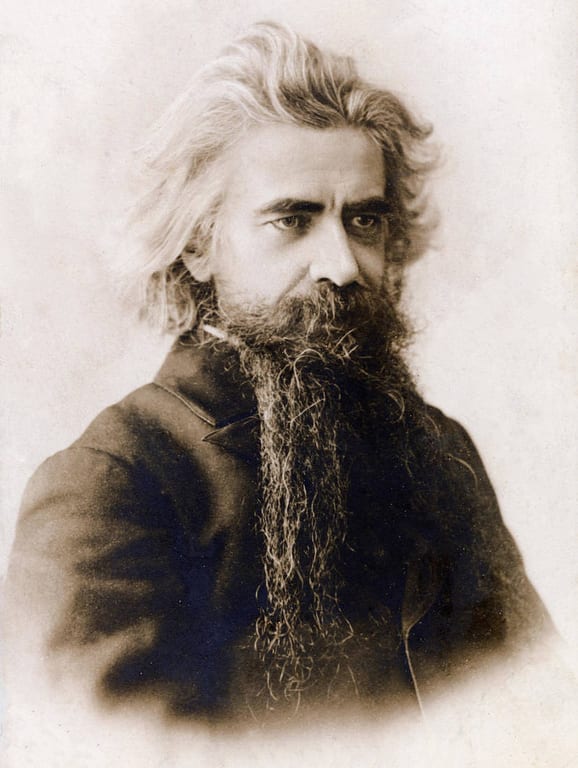
author
Vladimir Sergeyevich Solovyov
1853–1900
A visionary Russian thinker, Vladimir Sergeyevich Solovyov brought philosophy, theology, poetry, and social criticism together in an ambitious search for spiritual unity. His ideas about Sophia, Christian reconciliation, and the meaning of love helped shape Russian religious philosophy and the Symbolist movement.
1 Audiobook
The justification of the good : An essay on moral philosophy
by Vladimir Sergeyevich Solovyov
About the author
Born in Moscow on January 28, 1853, Vladimir Sergeyevich Solovyov studied at Imperial Moscow University and emerged as one of the most influential Russian philosophers of the late 19th century. He also wrote as a theologian, poet, pamphleteer, and literary critic, and became a friend and confidant of Fyodor Dostoyevsky.
Solovyov sought to reconcile reason, faith, and different religious traditions through the ideals of “whole unity” and sobornost, or organic spiritual community. His religious philosophy developed the concept of Sophiology, centered on divine wisdom, while his writings addressed Christian unity, Jewish civil rights, art, history, and love. Among his best-known works are Lectures on Godmanhood, The Meaning of Love, Justification of the Good, and “Tale of the Antichrist.”
He died on August 13, 1900, at the age of 47. Solovyov’s thought had a lasting influence on Russian religious thinkers, poets, and Symbolist writers, helping inspire the spiritual and intellectual revival of the early 20th century.