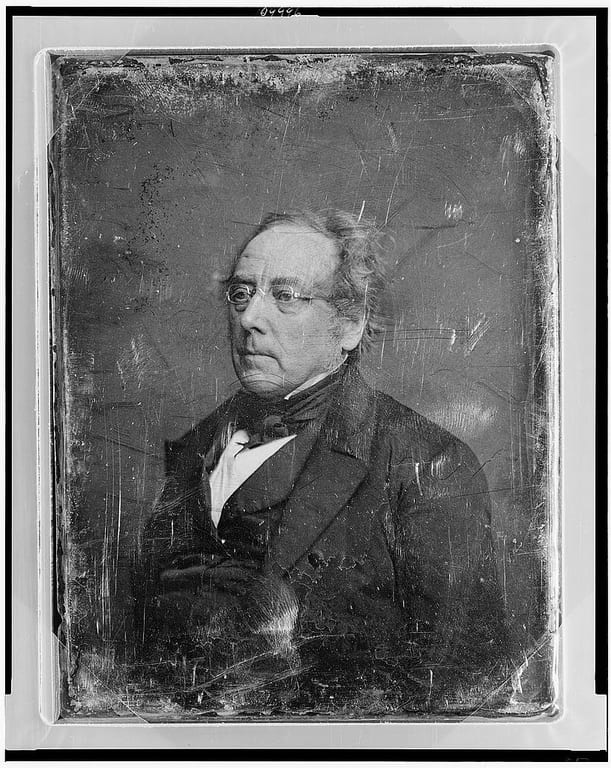
author
Thomas Ewbank
1792–1870
An inventive self-made writer, Thomas Ewbank turned a career in manufacturing into a lifelong study of machines, technology, and human ingenuity. His travels in Brazil and influential works on hydraulics and applied science reveal a restless curiosity about how people build, work, and shape the world around them.
1 Audiobook

About the author
Born in Barnard Castle, Durham, in 1792, Thomas Ewbank began working as a plumber and brassfounder at thirteen. He moved to London in 1812 and emigrated to the United States in 1819, establishing a successful New York business manufacturing lead, tin, and copper tubing. After retiring from business in 1836, he devoted himself to mechanics, invention, and writing.
Ewbank gained recognition for A Descriptive and Historical Account of Hydraulic and Other Machines for Raising Water, first published in 1842. He also traveled through Brazil in 1845–46, later describing the experience in Life in Brazil, a richly illustrated account of the country’s people, industries, arts, and natural resources.
In 1849, President Zachary Taylor appointed Ewbank United States Commissioner of Patents, a position he held until 1852. He later helped found and served as president of the American Ethnological Society, continuing his work as an author and student of technology until his death in New York in 1870.