- Listenly
- Browse
- Authors
- Christian Friedrich Daniel Schubart
- Ideen zu einer Ästhetik der Tonkunst

audiobook
Ideen zu einer Ästhetik der Tonkunst
by Christian Friedrich Daniel Schubart
Chapters
32 totalAnmerkungen zur Transkription.
IDEEN ZU EINER ÄSTHETIK DER Tonkunst.
Vorrede.
Inhalt.
Einleitung.
Skizzirte Geschichte der Musik.
Juden.
Griechische Musik.
Römer.
Schule der Deutschen.
Description
This compact work offers a surprisingly lively tour through the history of music, beginning with the ancient traditions of the Hebrews, Greeks, and Romans and moving forward to the great schools of Italy, Germany and France. The author, who painstakingly assembled and edited his father’s scattered manuscripts, presents the material in language that welcomes listeners without a formal musical education. The narrative balances scholarly insight with an engaging, conversational style that makes each era feel immediate.
What sets the book apart are the concise yet vivid portraits of the era’s most celebrated composers and virtuosos. In just a few sentences, figures such as Handel, Gluck, Bach, and their successors emerge with distinct personalities, allowing listeners to “hear” their music through carefully chosen words. The author’s deep knowledge of performance and composition shines through, while his patriotic enthusiasm adds a colorful, historical flavor.
The first section delivers this sweeping overview, and a promised second part will explore the fundamental principles of the art, from the regal pipe organ to the humble recorder. Listeners can look forward to a thoughtful blend of history, critique, and the timeless spirit of the tonal craft.
Details
Language
de
Duration
~9 hours (519K characters)
Release date
Aug 1, 2026
Rights
Public domain in the USA.
About the author
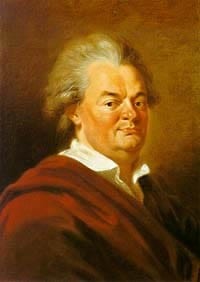
Christian Friedrich Daniel Schubart
1739–1791
A bold voice of the German Sturm und Drang, Christian Friedrich Daniel Schubart combined poetry, music, journalism, and sharp political criticism. His fearless writing led to ten years of imprisonment, yet he emerged as one of the era’s most memorable advocates for intellectual and personal freedom.
View all booksYou may also like

The Case of Wagner, Nietzsche Contra Wagner, and Selected Aphorisms.
by Friedrich Wilhelm Nietzsche

Plays, Acting and Music: A Book Of Theory
by Arthur Symons

Musical Memories
by Camille Saint-Saëns

Histoire de la musique
by Henri Lavoix

Modern Musical Drift
by W. J. (William James) Henderson

How music grew, from prehistoric times to the present day
by Marion Bauer, Ethel R. (Ethel Rose) Peyser


Chopin and Other Musical Essays
by Henry T. Finck