
author
Clarence Darrow
1857–1938
A brilliant courtroom advocate and lifelong challenger of injustice, he became one of America’s most famous lawyers through landmark cases involving labor rights, evolution, and criminal justice. His powerful arguments and humane perspective still shape how legal history is remembered.
7 Audiobooks

Crime: Its Cause and Treatment
by Clarence Darrow

An eye for an eye
by Clarence Darrow

Industrial Conspiracies
by Clarence Darrow

Farmington
by Clarence Darrow

A Persian Pearl, and Other Essays
by Clarence Darrow

Resist not evil
by Clarence Darrow
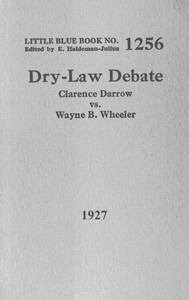
Dry-law debate : Clarence Darrow vs. Wayne B. Wheeler
by Clarence Darrow, Wayne Bidwell Wheeler
About the author
Born in Kinsman, Ohio, in 1857, Clarence Darrow became a lawyer in Chicago and built a reputation as a passionate defender of workers, civil liberties, and people facing the death penalty. He represented labor leader Eugene V. Debs and later became closely associated with the American Civil Liberties Union.
Darrow is remembered for several celebrated trials, including the defense of Nathan Leopold and Richard Loeb, the Scopes “Monkey” Trial, and cases involving labor disputes and racial injustice. Known for his sharp questioning and skepticism toward rigid authority, he often argued that human behavior should be understood with compassion as well as judged by law.
He continued writing and lecturing throughout his later years, becoming a widely recognized public intellectual. Clarence Darrow died in Los Angeles in 1938, leaving behind a legacy as one of the most influential trial lawyers in American history.